Rethinking Memex in the Age of AI Memory.The machine is presented as an assistant. It helps. It reduces burdens. It grants freedoms. But every freedom granted by the machine simultaneously alters the role previously occupied by the human subject.
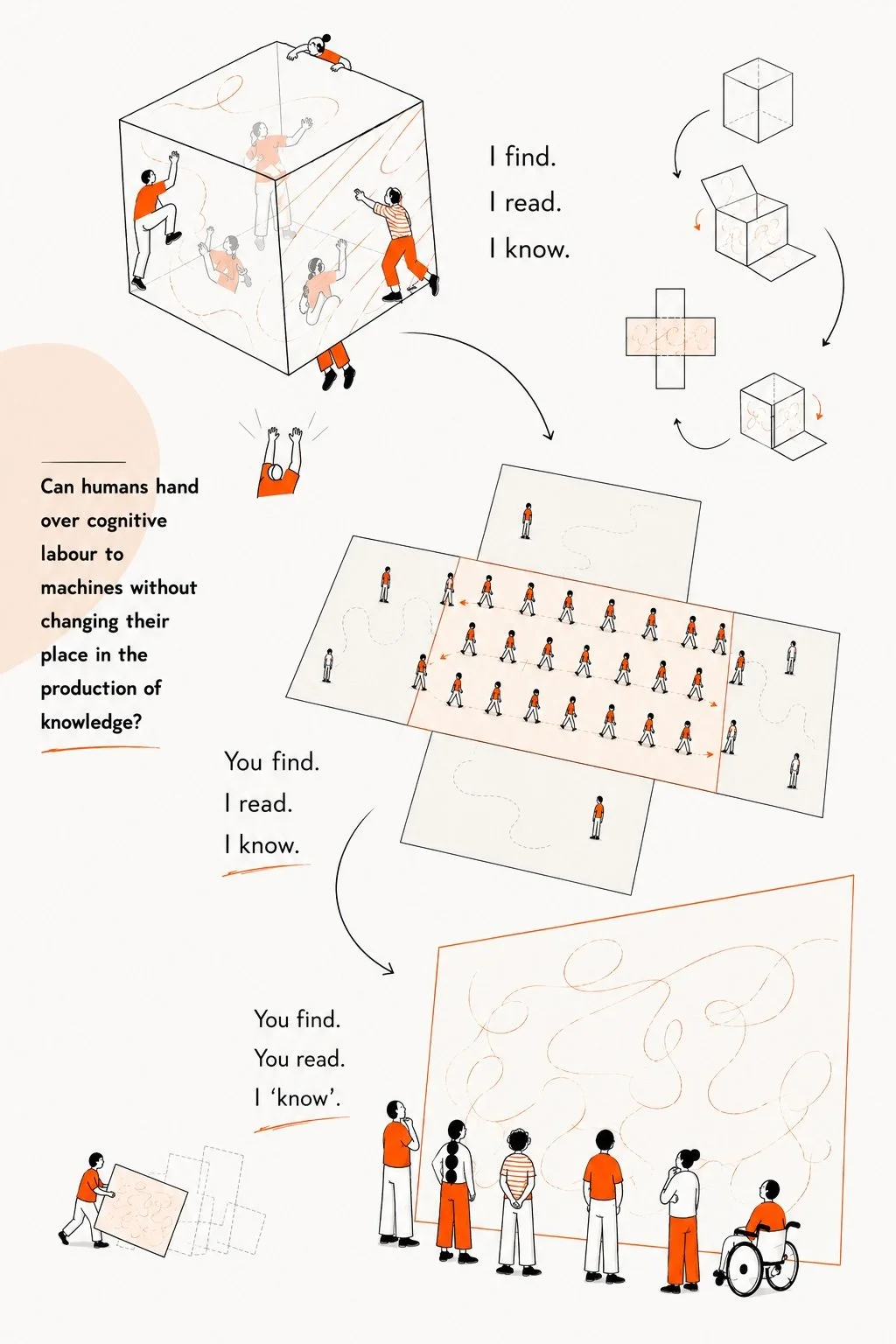
You Find, You Read, I 'Know".
〰️
You Find, You Read, I 'Know". 〰️
Revisiting Bush’s vision of augmented knowledge to reflect on what happens to the human position in knowledge production when AI becomes an active participant.
In early 2026, discussions surrounding Claude Code’s memory architecture began circulating widely online following analyses of leaked source code and internal documentation. Among the most frequently discussed components were MEMORY.md, project-level memory files, indexing mechanisms, retrieval systems, and an automated maintenance process known as Auto Dream. These discussions raise a broader question about memory itself: what exactly does it mean for a machine to remember?
Claude Code LeakLong before AI assistants and large language models, similar questions appeared in one of the most influential visions of machine memory: Vannevar Bush’s Memex.
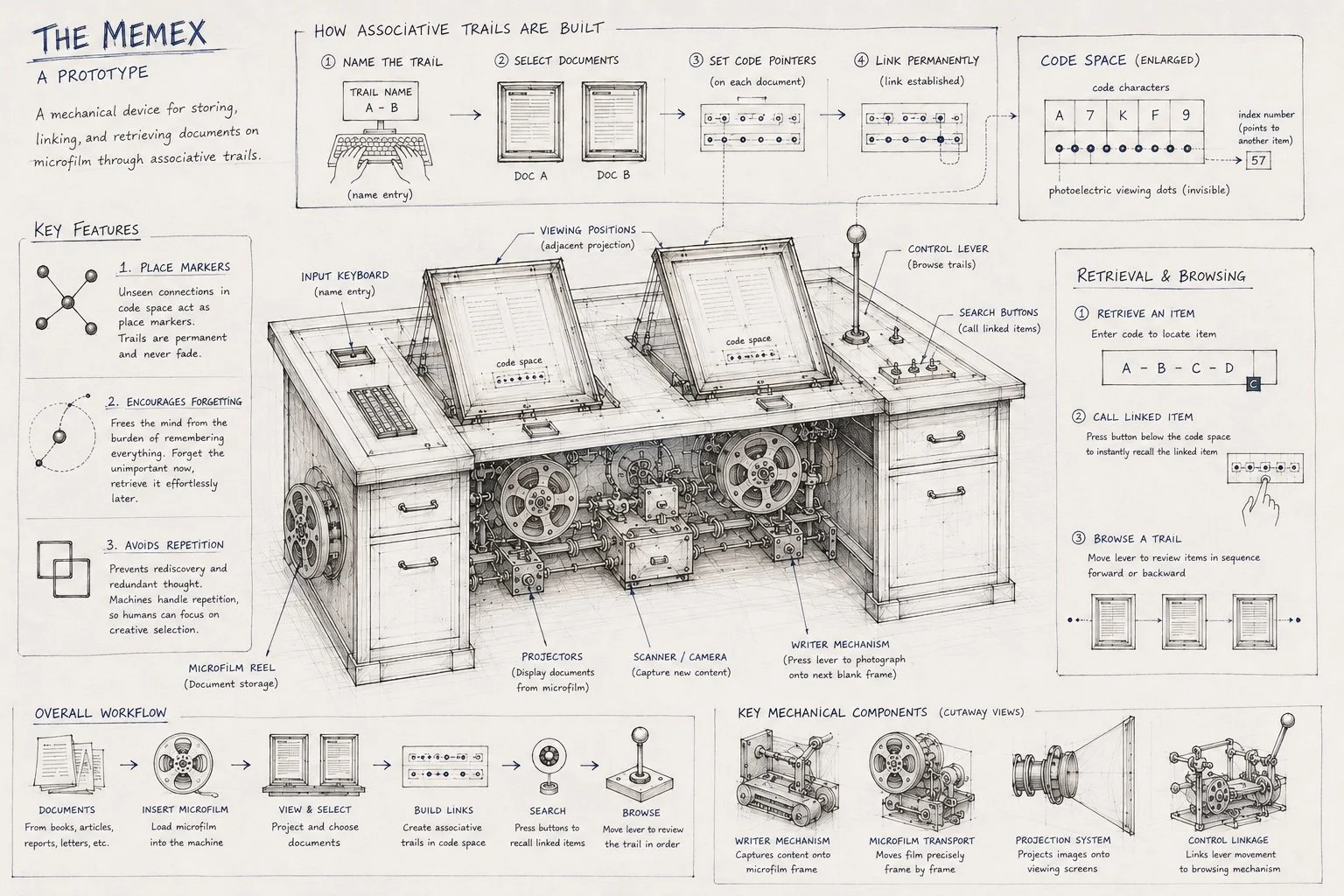
First introduced in his 1945 essay As We May Think, the Memex was envisioned as a desk-like machine designed to help individuals navigate rapidly expanding bodies of scientific knowledge. Documents would be stored on microfilm and could be retrieved whenever necessary. Users could also add new materials, creating a continuously expanding personal archive. More than a storage device, the Memex was imagined as a tool for managing the growing complexity of modern knowledge.
Bush argued that the central problem of modern knowledge was not the absence of information but the difficulty of accessing it. Existing indexing systems were cumbersome, hierarchical, and poorly suited to human thought. Human beings did not think alphabetically; they thought associatively. To address this problem, Bush proposed what he called associative trails. Rather than organising information according to fixed classifications, users could create links between documents, connecting ideas across different domains and contexts. Once established, these trails could be followed, revisited, and expanded over time.
Big Ideas, Real Impact.
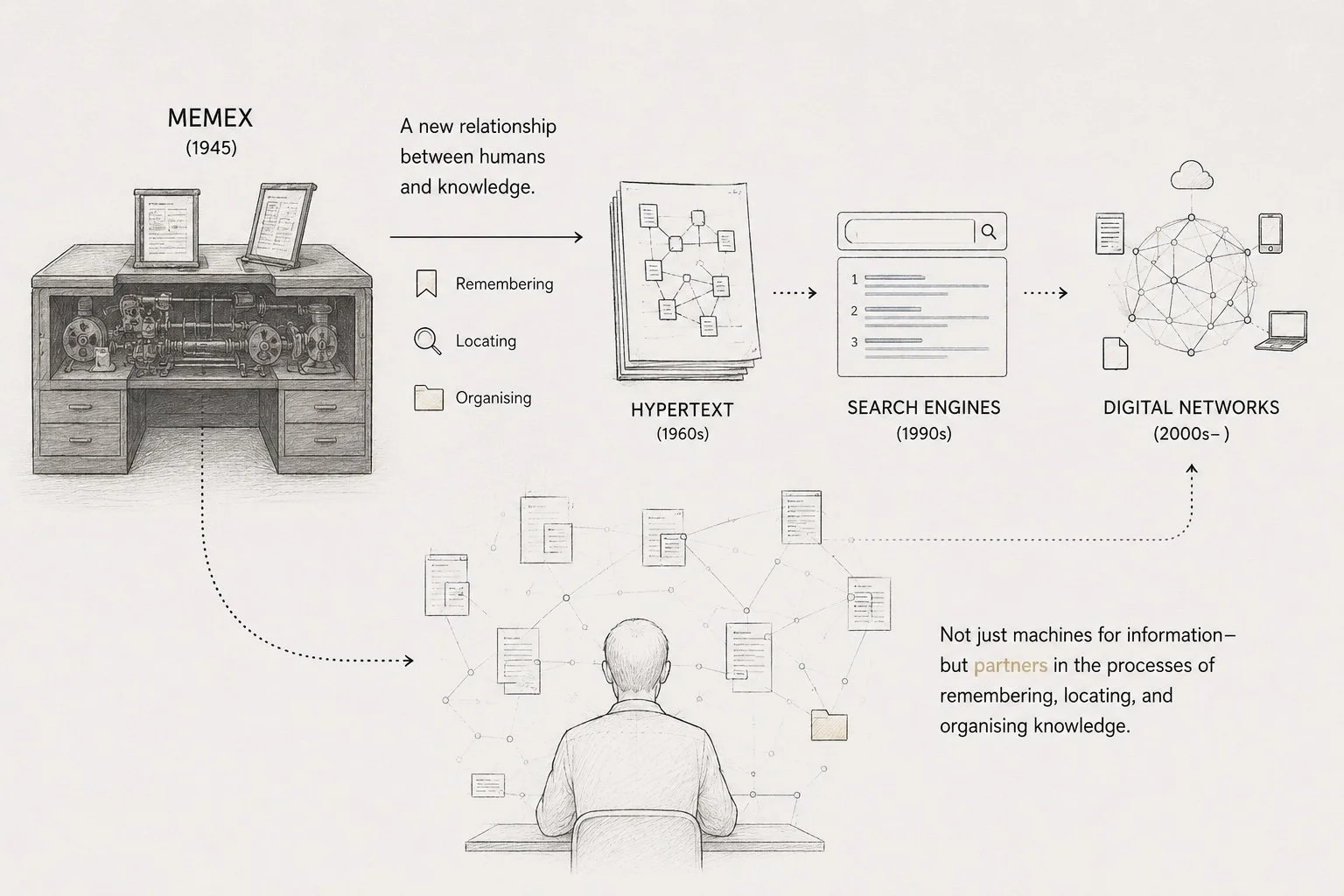
The Memex is often celebrated as a precursor to hypertext, search engines, and contemporary digital networks. Yet perhaps its most significant contribution lies elsewhere. It proposed a new relationship between humans and knowledge, one in which machines would increasingly assist the processes of remembering, locating, and organising information.
The Privilege of Forgetting
Bush argued that humanity “needs to mechanize its records more fully if it is to push its experiment [civilisation] to its logical conclusion and not merely become bogged down by overtaxing its limited memory, allowing much of that civilisation to be forgotten. His excursions may be more enjoyable if he can reacquire the privilege of forgetting the manifold things he does not need to have immediately at hand, with some assurance that he can find them again if they prove important.” In this sense, Memex was not simply a memory machine. It was a machine designed to redistribute cognitive labour.
Another danger brought about by non-mechanised forgetting is repetition, and Memex, as a mechanised memory device, could prevent such repetition. It would free human beings from the burden of repetition. People would no longer need to work through repetitive ideas, nor repeatedly think through the same problems. In Bush’s view, human beings should not be burdened by repetitive thought processes such as arithmetic, for these are processes that mechanical devices can clearly perform better. As Bush suggests, the creative aspect of thought “is concerned only with the selection of the data and the process to be employed,” while the subsequent manipulation is repetitive in nature and therefore suitable for delegation to the machine.
But privileges are never free.
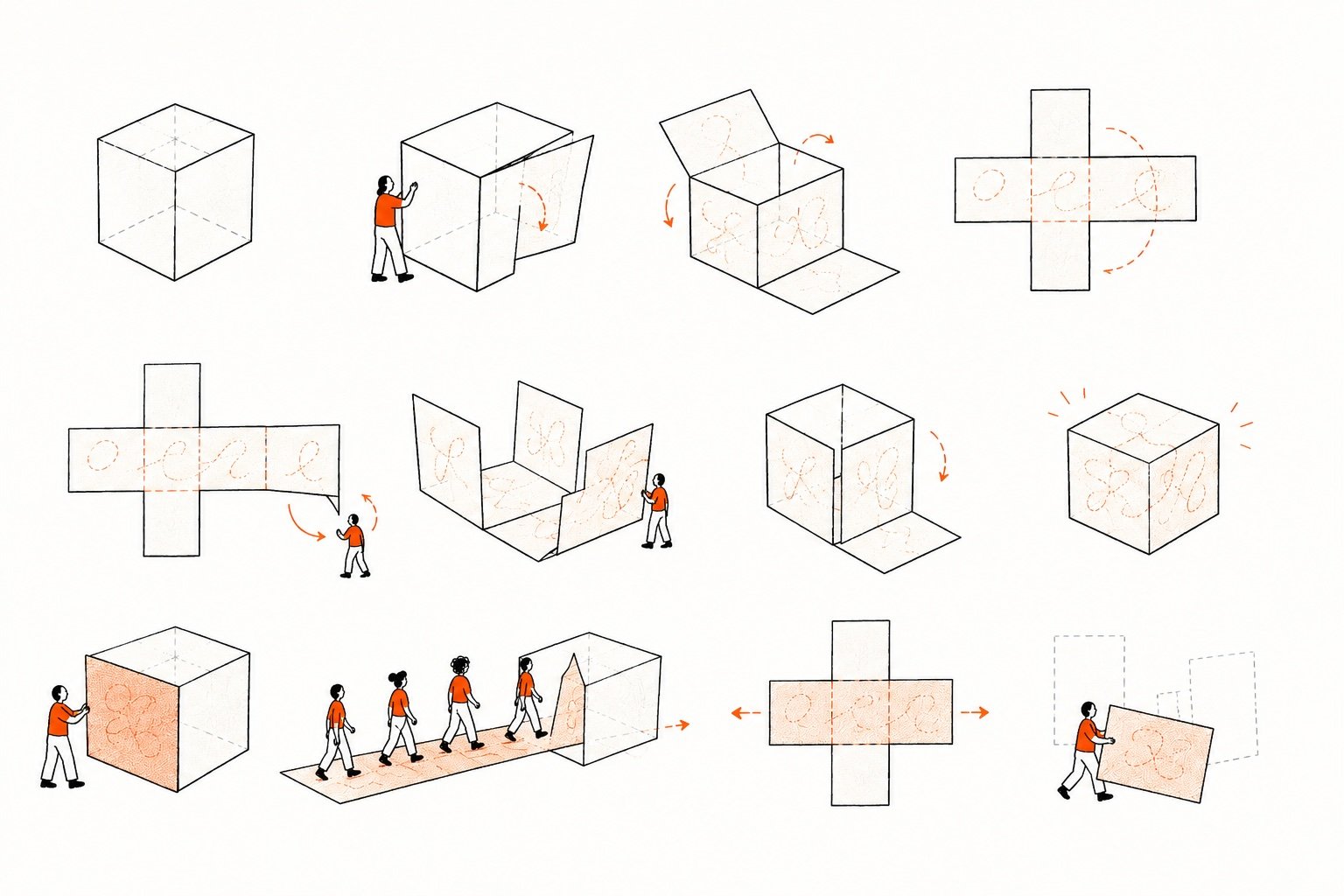
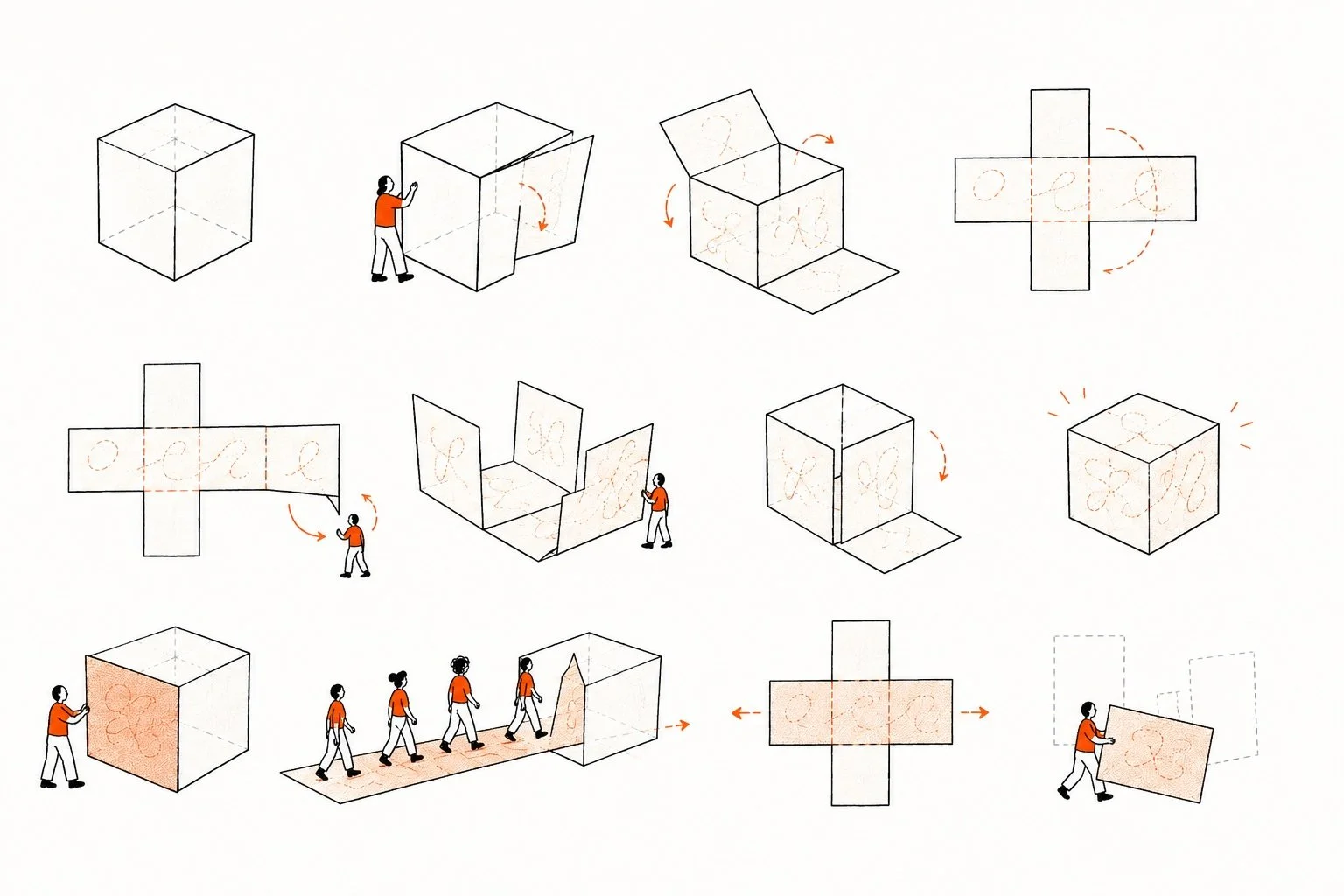
Memory shares the same Sanskrit root as martyr and has often been associated with persistence, difficulty, obligation, and even suffering. To remember is not merely to access information. It is also to carry something, to remain affected by it, and to be unable to entirely escape its presence. Memory possesses weight.
Similarly, repetition has not always been understood as a problem. As Jacques Derrida argues in Archive Fever, repetition is not evidence of wasted thought but a constitutive feature of archival existence itself. Repetition allows archives to persist, circulate, and remain available across time. It preserves while simultaneously transforming. Repetition is not external to memory but one of its fundamental conditions.
For Bush, and for many scholars who followed him, reading appears secondary to selection. The central difficulty lies not in reading data, but in locating the right data. Implicit within this assumption is the belief that once the correct information has been selected, misunderstanding and misinterpretation largely disappear, leaving only transparent access to knowledge. Likewise, if scientific ideas continue to be repeated rather than advanced, the problem is assumed to be one of insufficient circulation rather than insufficient understanding. Yet this assumption deserves closer scrutiny. The obstacle to knowledge is not always insufficient access to information. Perhaps what is missing is the act of reading itself.
Eighty years later, many of the principles underlying Memex appear again within contemporary AI systems. Claude Code’s memory architecture reveals a striking preference for retrieval over storage. Rather than treating memory as a stable repository of information, the system relies heavily on indexing, references, retrieval pathways, project files, and external resources.
If Memex proposed that humans should not have to remember everything, Claude Code suggests that systems should not necessarily rely on remembering everything either. Information becomes increasingly distributed across files, environments, repositories, and external resources. The system remembers not primarily by storing content, but by knowing where content can be found.
Furthermore, mechanisms such as Auto Dream introduce processes of compression, merging, consolidation, and memory maintenance. Existing memories are reorganised in order to reduce redundancy and maintain efficiency. Once again, repetition is treated as something to be minimised.
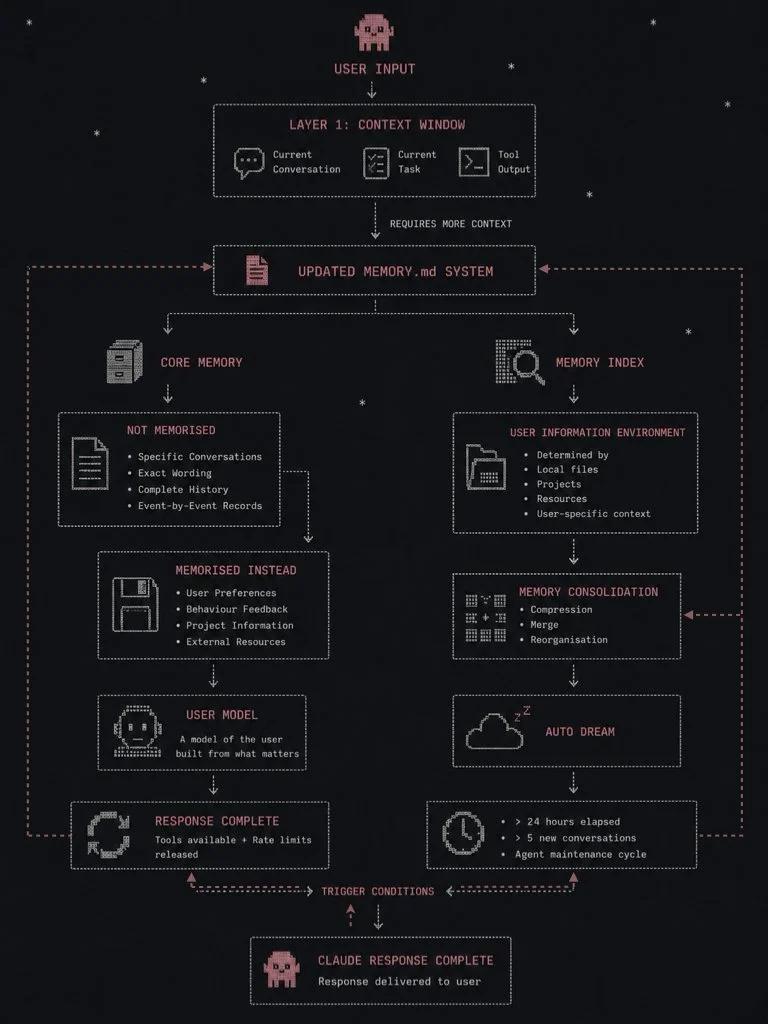
Claude Code and the Return of Memex
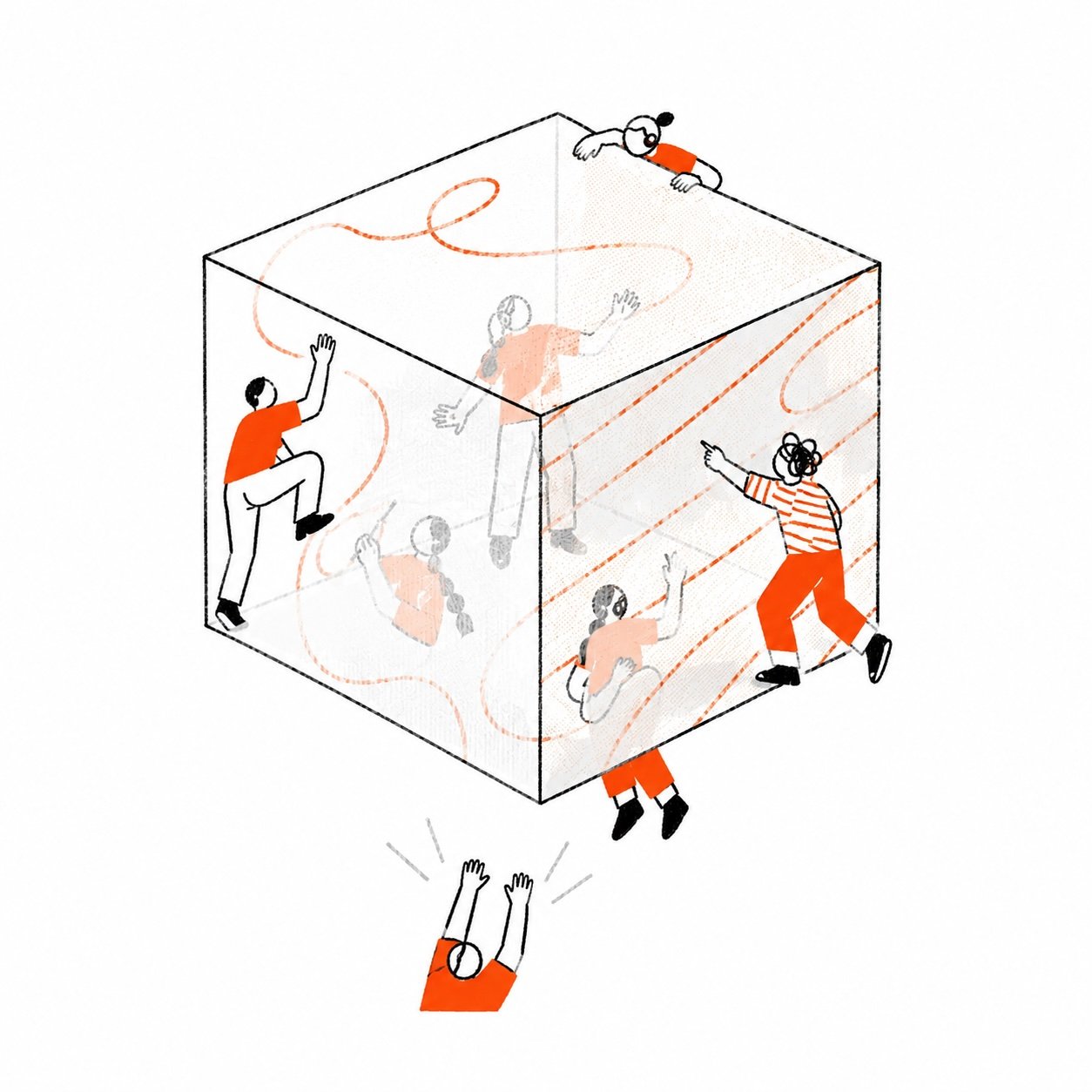
The Loss of Reading
Viewed historically,
the most significant change may not be the evolution of machine memory itself, but the gradual repositioning of humans within the production of knowledge. In print culture, the dominant figure was the reader.
You find.
I read.
I know
With Memex,
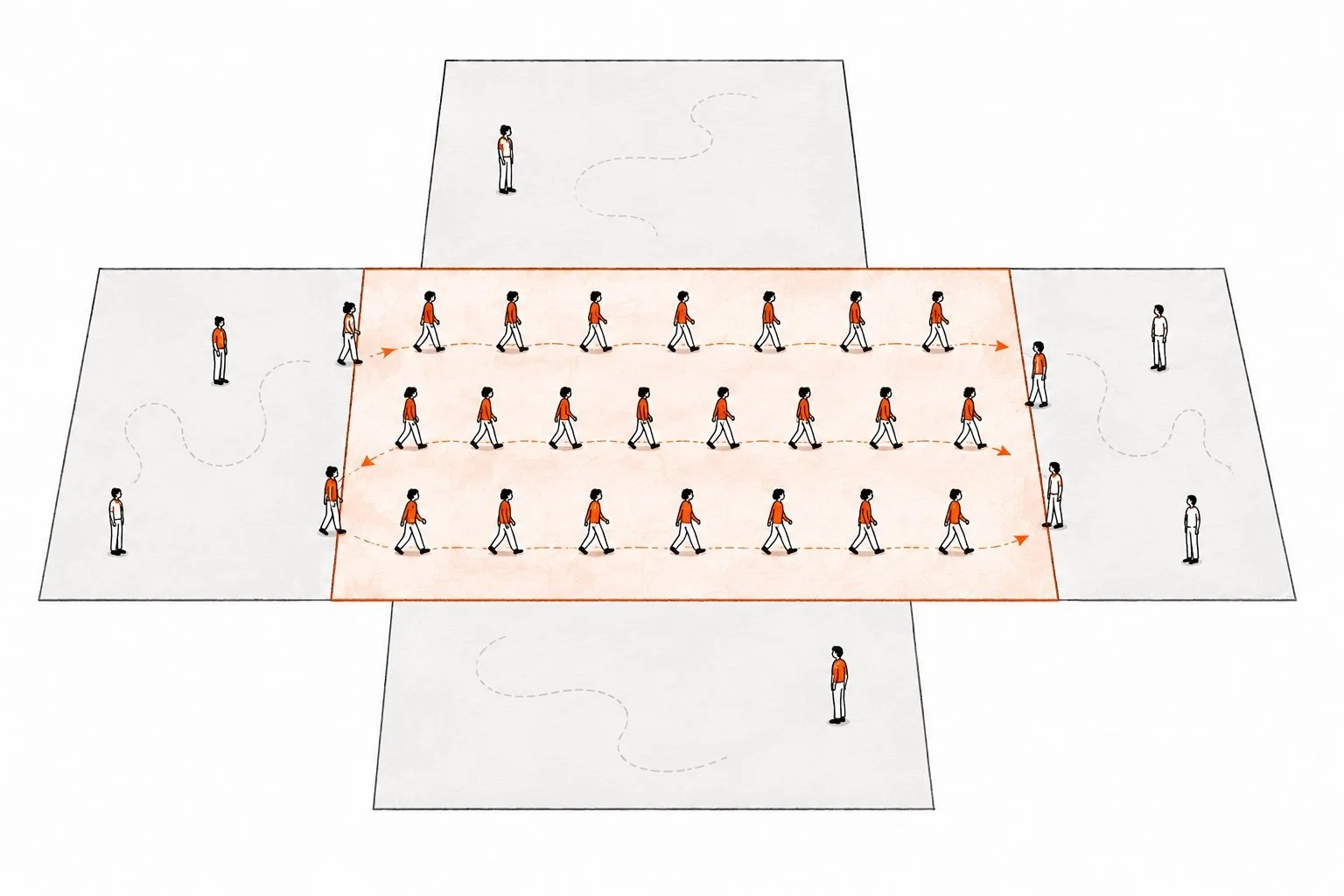
You find. I read. I know.
Search engines later transformed this model into a practical reality. Retrieval became increasingly automated, while reading remained central to knowledge production. Critiques of search engines have therefore tended to focus on the ways retrieval is organised. Search engines do not simply locate information; they establish pathways between pieces of knowledge, amplify certain forms of visibility, and diminish others. By ranking results and privileging particular connections, they shape which knowledge becomes more accessible and which remains comparatively obscure. Yet despite these concerns, the position of the reader largely remained intact. Search engines 'helped' users find information, but the task of reading, interpreting, and evaluating that information still largely belonged to the human subject.
Now, AI assistants introduce another shift.
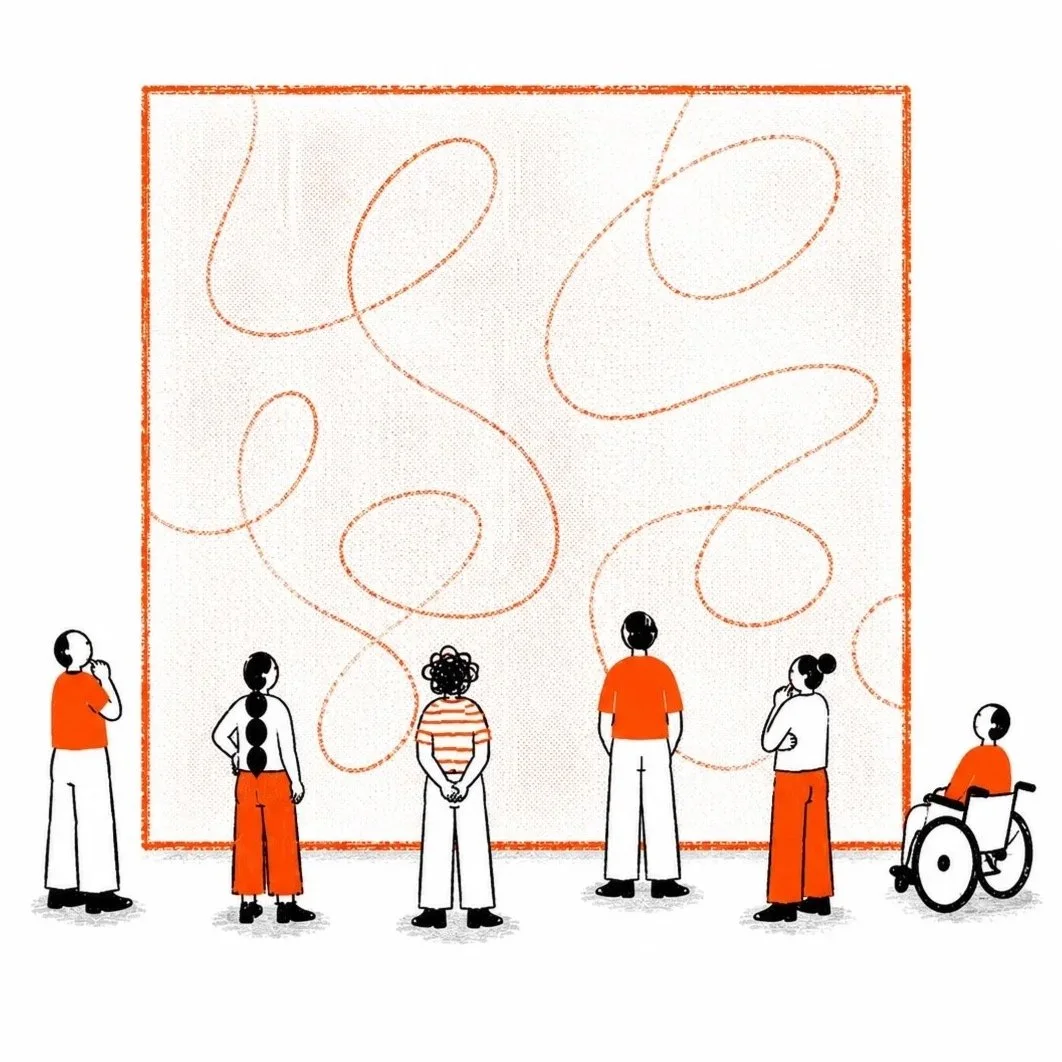
The machine retrieves information, compares sources, summarises arguments, and presents condensed interpretations. In this sense, AI increasingly assumes functions that were previously associated with reading itself. Rather than engaging directly with source materials, users are increasingly presented with materials that have already been filtered, organised, and interpreted by the machine. The role of the human subject shifts then. Their task is increasingly not to read primary materials directly, but to assess, accept, reject, or verify the interpretations that the machine has already produced.
You find.
You read.
I ‘know’
That may ultimately point towards an authoritarian future of power. A person may be granted the possibility of thinking X, but consequently think only X. The issue is not that alternative thoughts are explicitly prohibited, but that the conditions under which thought takes place are increasingly structured by technical systems. The subject of authority gradually shifts from the human user towards the machine itself, which was originally intended to function as humanity’s loyal servant.
The Paradox of Assistance
Every successful assistant changes the conditions under which human action takes place. The more effectively machines assume responsibility for remembering, retrieving, organising, and interpreting information, the more they redefine what remains for humans to do.
The pleasure of forgetting